
Introduction to SQL
Introduction
In this module, we will look at the following:
-
What is a database?
-
What is SQL?
-
Executing SQL queries
-
What are SQL dialects?
1. What is a database?
-
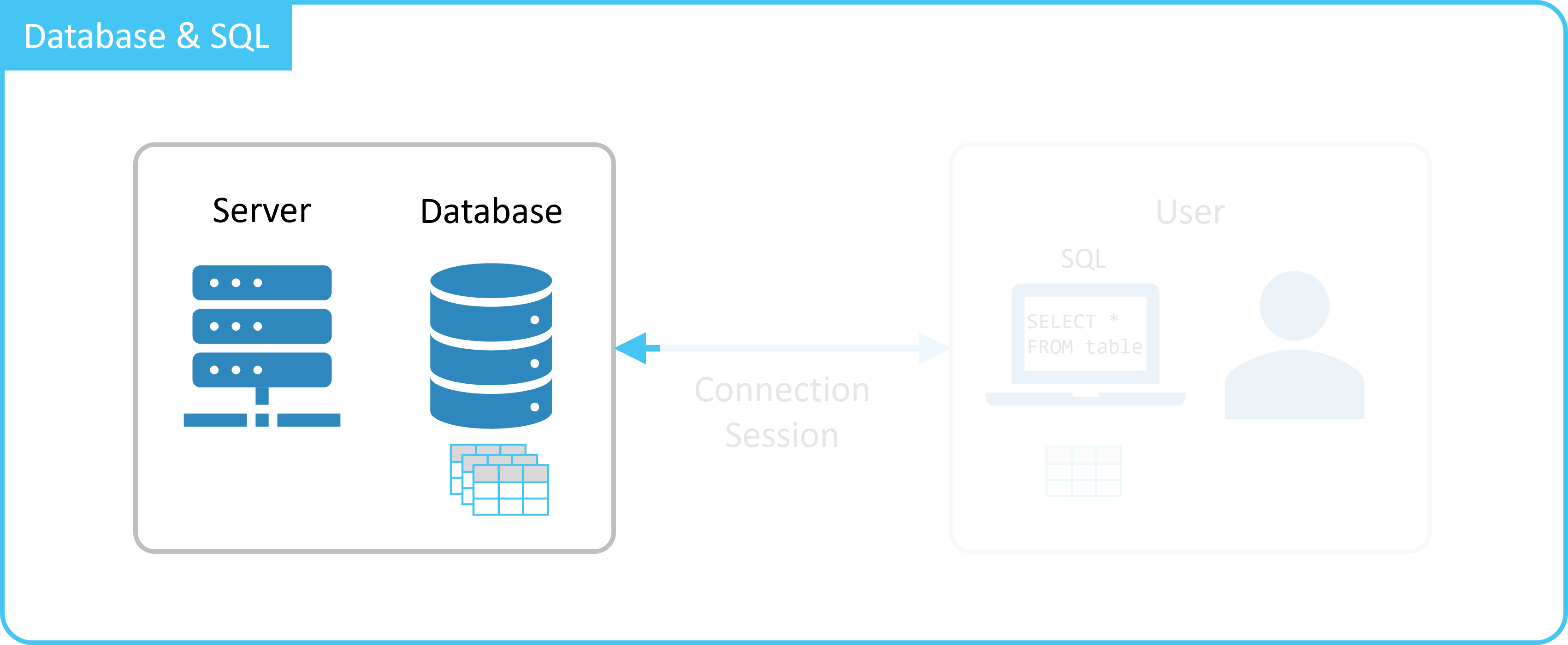
An organized collection of data.
-
There are many different types.
-
In this training, we work with so-called relational databases.
-
In these, data is stored in tables with columns and rows.
-
A database is usually located on a server.
2. What is SQL?
-
SQL is an abbreviation that stands for Structured Query Language.
-
Developed since 1970 and has been around for more than 50 years.
-
Still in development.
- There are ISO standards.
-
It is a database language:
- For interaction with databases.
- Interactions such as:
- Requesting data from tables in a database.
- Grouping, merging, filtering, etc.
- Creating and modifying tables.
- Etc.
-
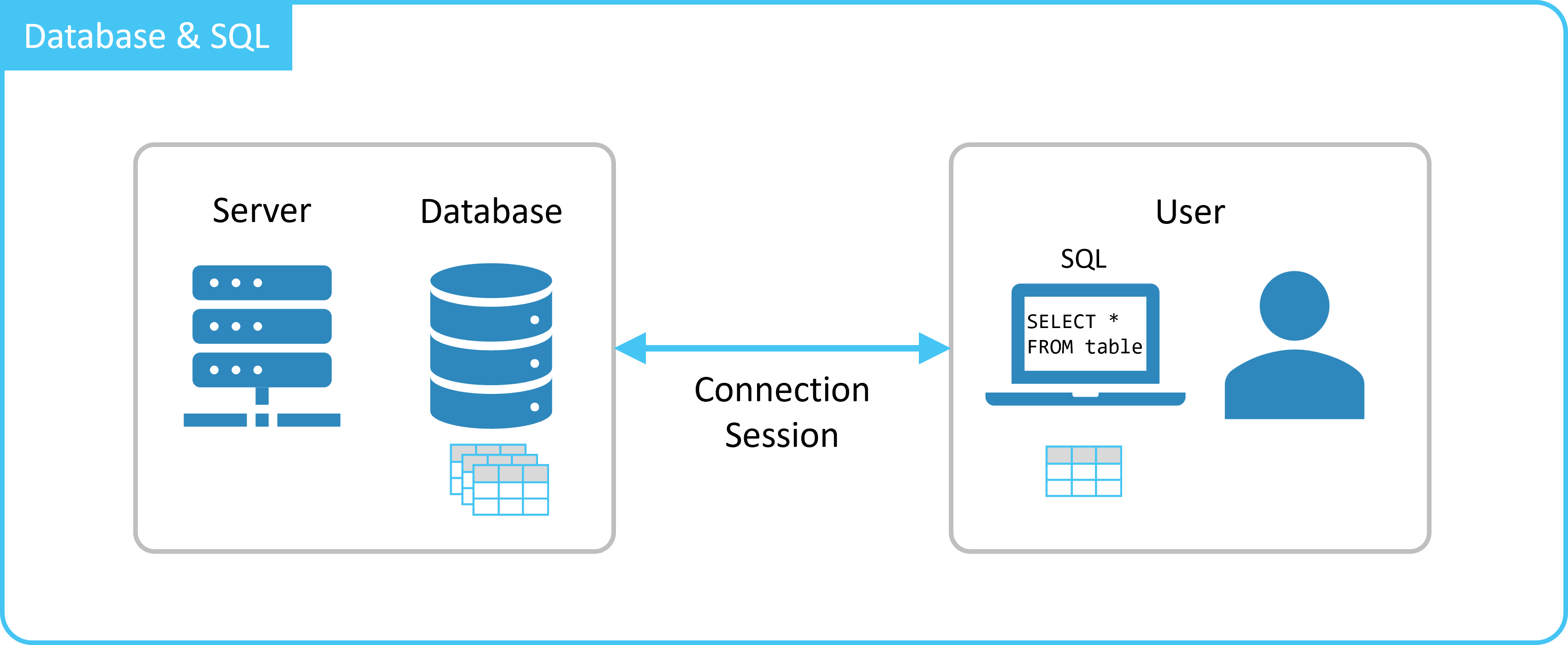
As a user, you make a connection to a database.
- You establish this connection from a session and connection.
- You may need to authenticate for this.
- With a username and password.
-
With the SQL language, you can execute queries (commands) on the database.
-
For example, you can request data from a table.
3. Executing SQL queries
-
There are different tools (database management software/tools) to work with SQL.
-
With such a tool, you can, for example:
-
Connect to a database.
-
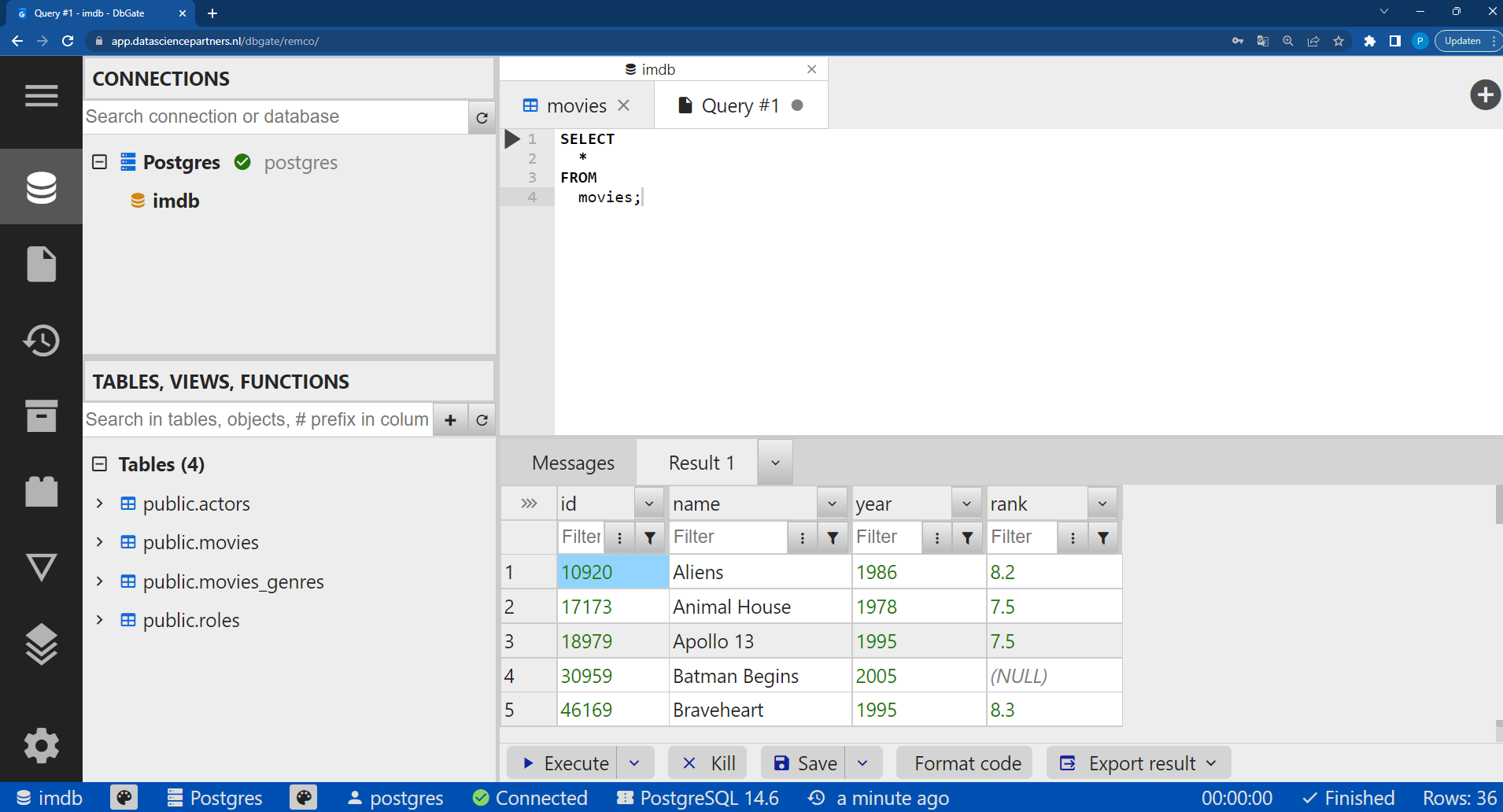
Execute SQL queries on the database.
-
-
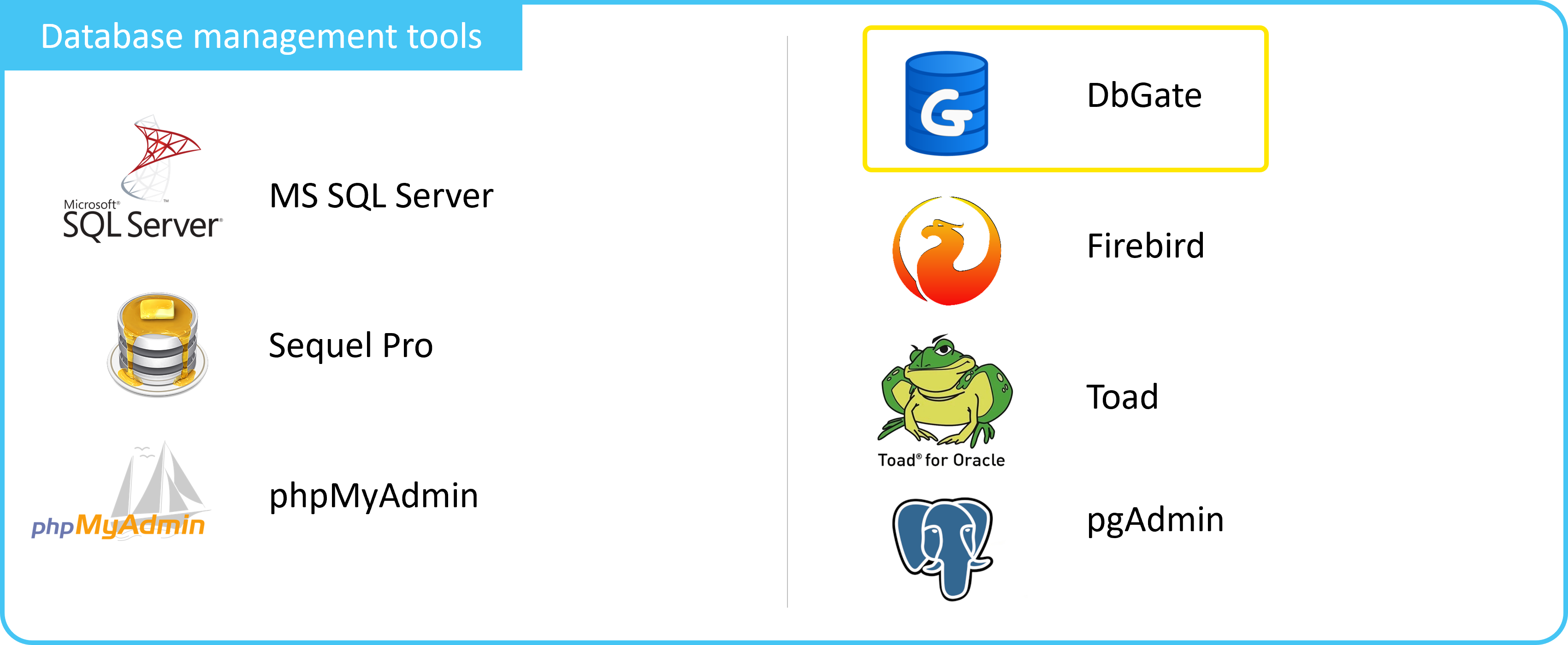
Examples of such tools are:
-
During this training, we work with DbGate.
-
An open source tool for different SQL dialects.
4. What are SQL dialects?
-
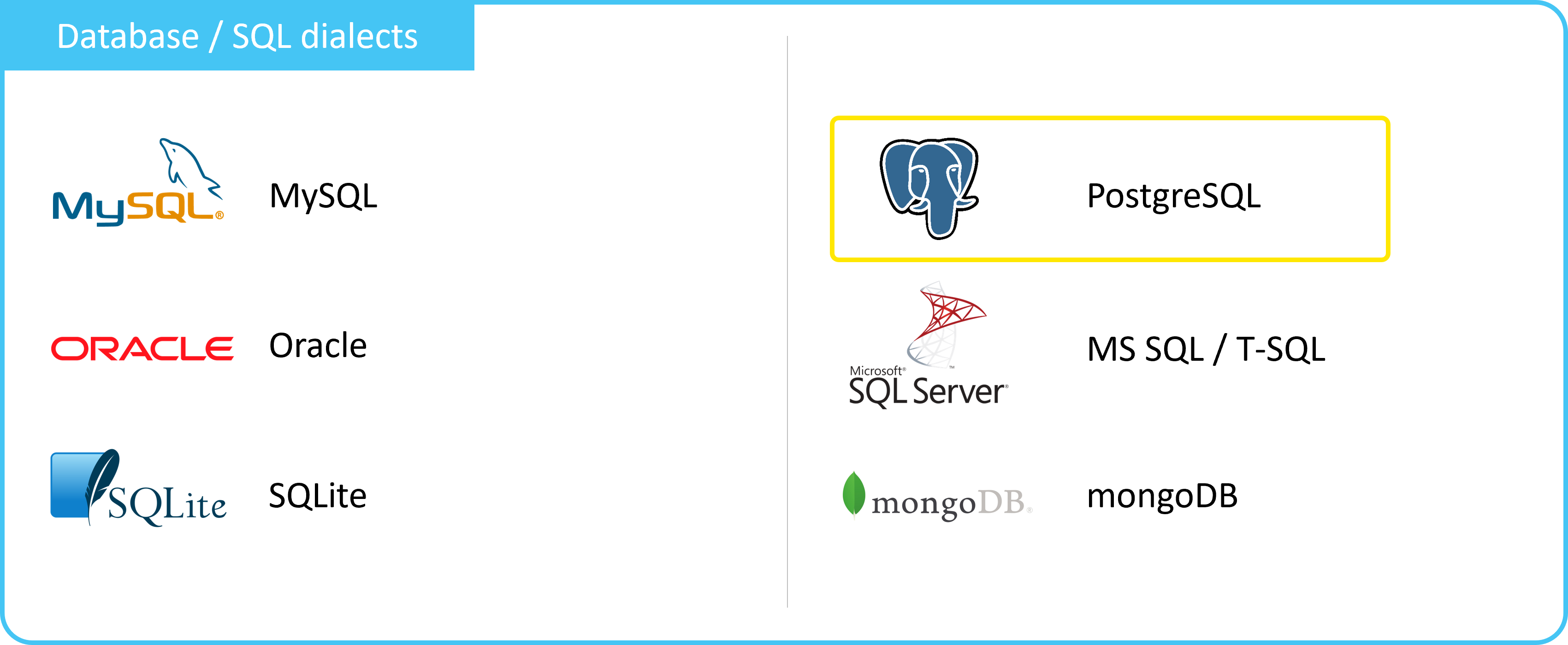
There are different variants within SQL.
-
These are called dialects.
-
There are some small differences between the dialects.
-
For example in how you work with dates.
-
During the training, we work with PostgreSQL.
-
An open source dialect that is widely used.
5. IMDb database
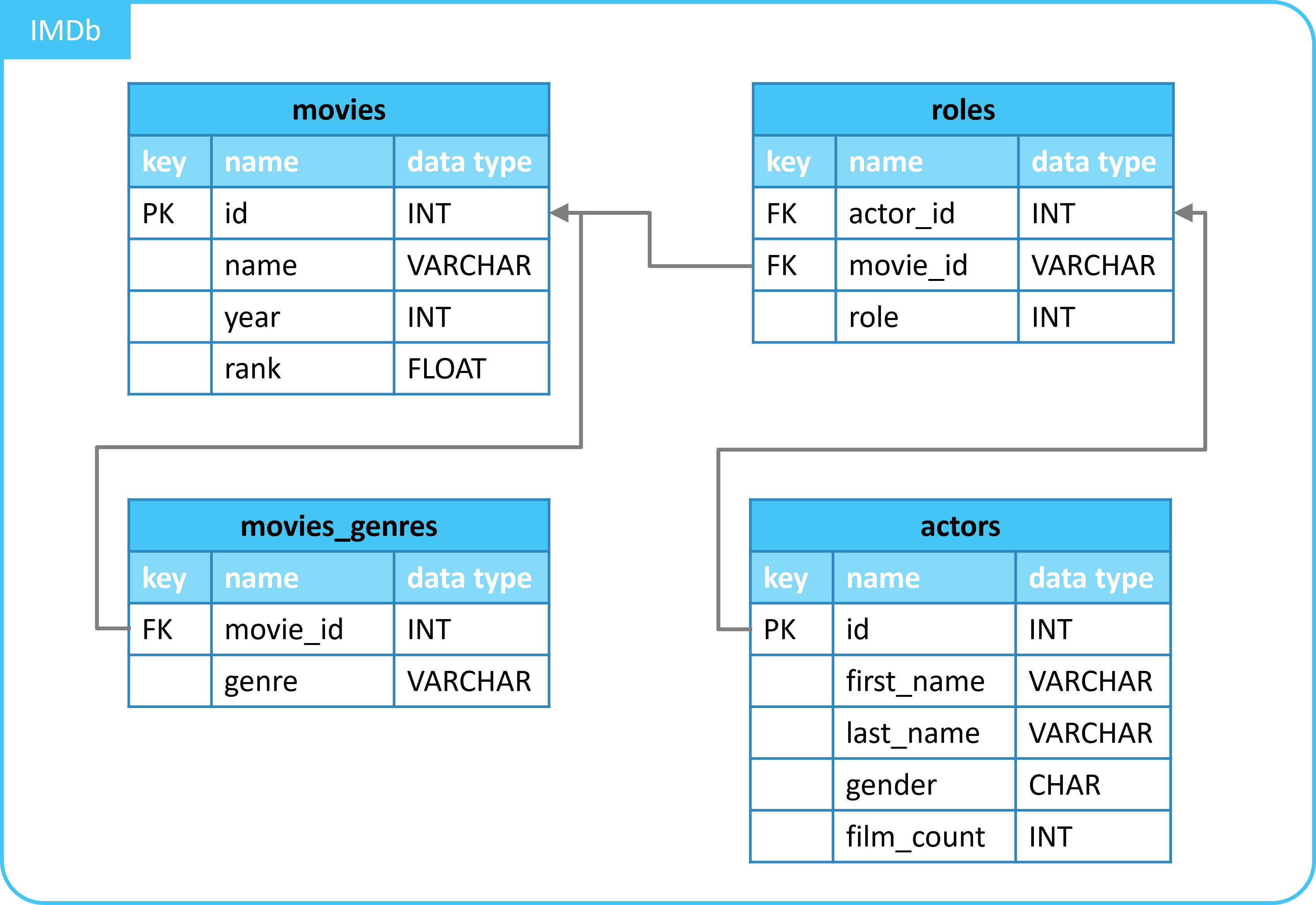
In this training, we mainly work with a database containing movie data.
The IMDb (International Movie Database) database.
This database contains multiple tables with data about movies, genres, roles, and actors.
Summary
-
A database is an organized collection of data.
- Tables with columns and rows.
-
SQL is an abbreviation that stands for Structured Query Language.
-
A database language to execute queries (commands).
-
Such as retrieving data from a table.
-
-
There are different database management tools, such as:
-
MS SQL Management Studio / SQL Server
-
Sequel Pro
-
DbGate
-
-
There are different SQL dialects, such as:
-
MS SQL
-
Oracle
-
PostgreSQL
-