
Merging Data with LEFT JOIN
Introduction
There are different ways to merge data.
We look at the LEFT JOIN.
The LEFT JOIN is most commonly used in practice.
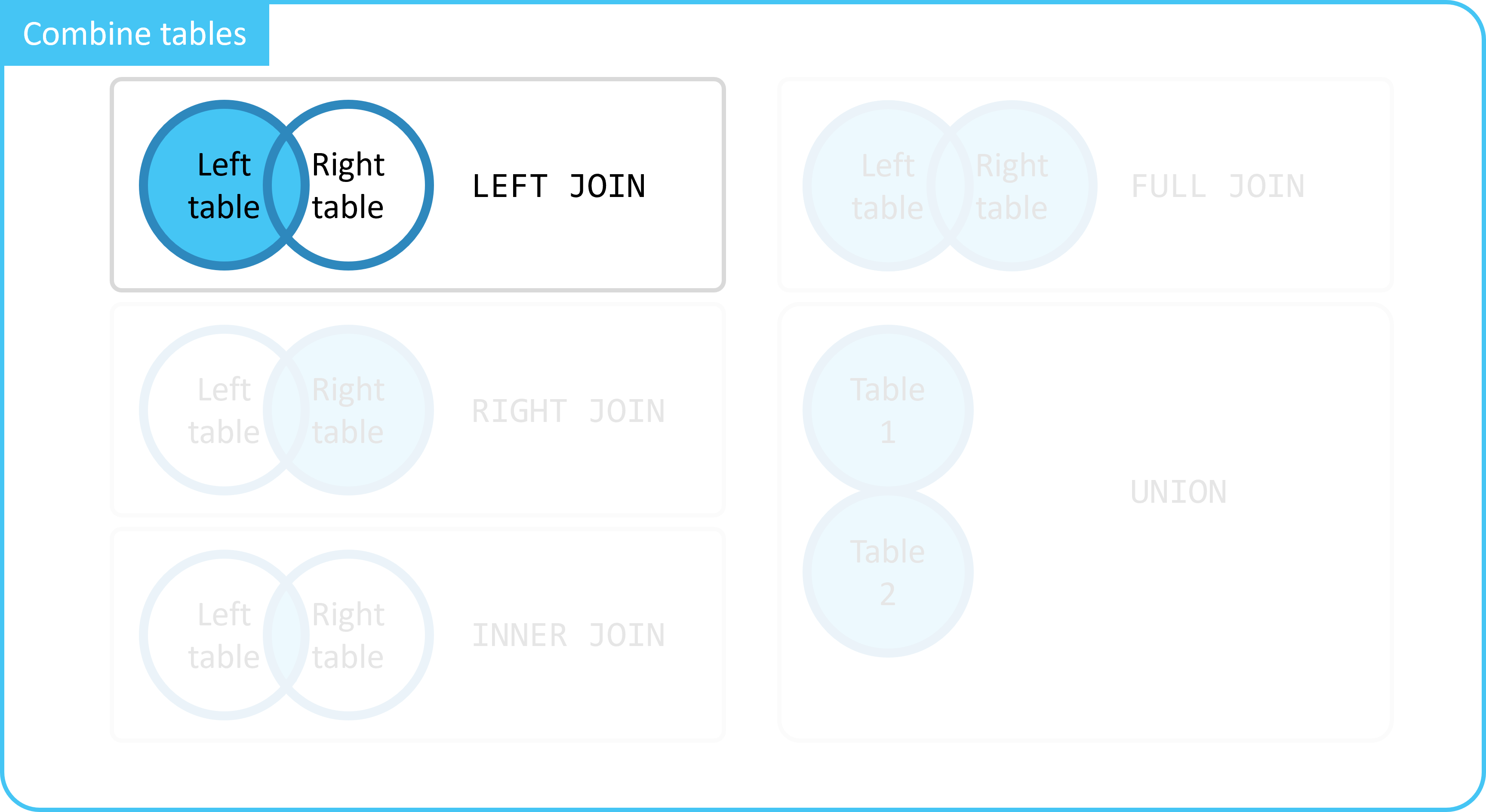
You use a LEFT JOIN as follows:
- You have a table (left table).
- You want to add data from another table to this table (right table).
- With a
LEFT JOIN:- You select all rows from the left table.
- With a match for each row with data from the right table.
We will look at this from an example.
1. Example LEFT JOIN
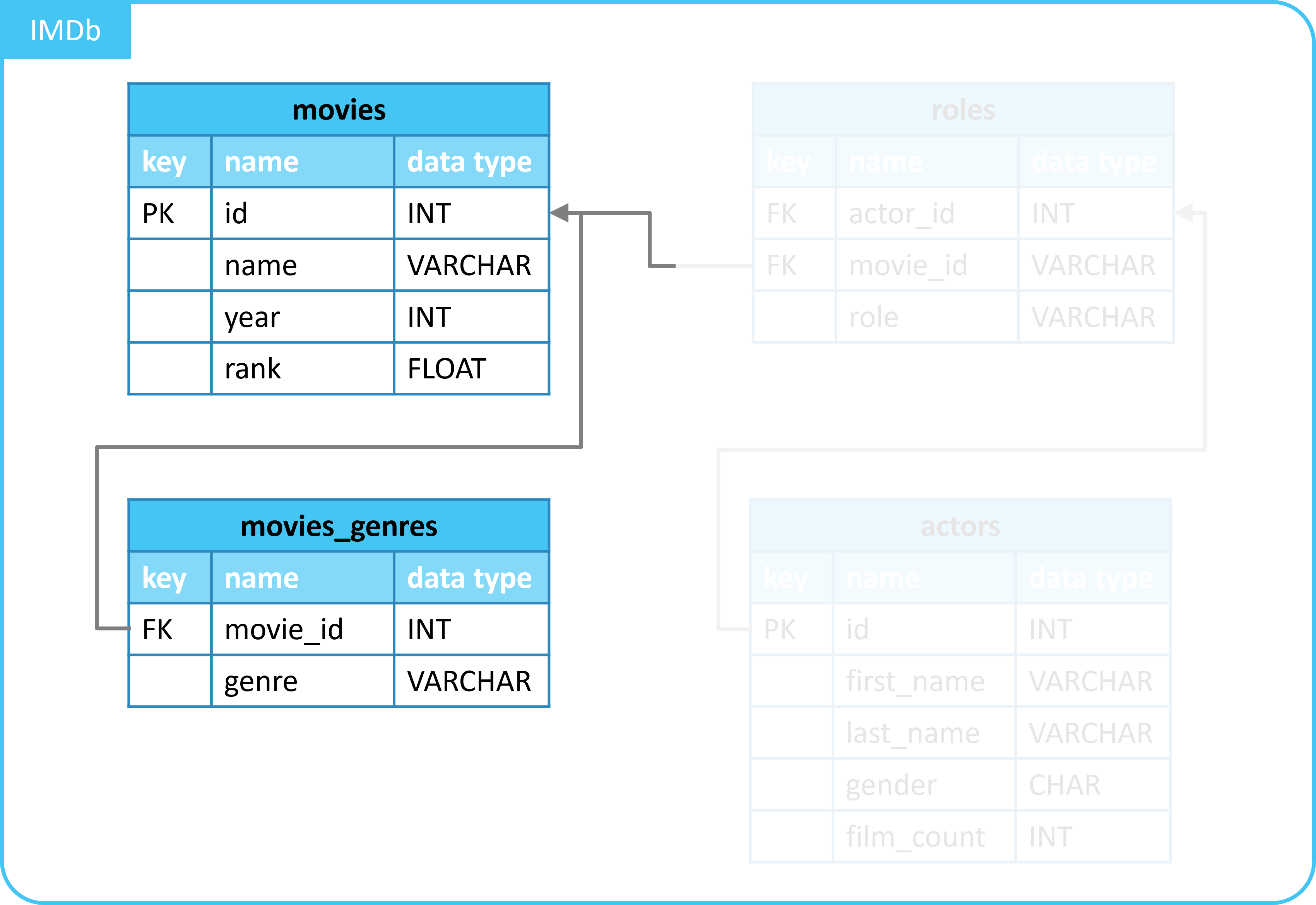
We have tables movies and movies_genres:
1.1. Table movies
| id | name | year | rank |
|---|---|---|---|
| 10920 | Aliens | 1986 | 8.2 |
| 17173 | Animal House | 1978 | 7.5 |
| 18979 | Apollo 13 | 1995 | 7.5 |
| 30959 | Batman Begins | 2005 | (NULL) |
| ... | ... | ... | ... |
1.2. Table movies_genres
| movie_id | genre |
|---|---|
| 10920 | Sci-Fi |
| 10920 | Action |
| 10920 | Thriller |
| 10920 | Horror |
| 17173 | Comedy |
| 18979 | Drama |
| ... | ... |
1.3. Expected Result
- In table
movieswe have data of 36 films. - In table
movies_genreswe have 103 genres of films. - Each film can have multiple genres.
- This is a one-to-many relationship.
If we were to look up the genres for each film, it should lead to the following result:
| id | name | year | rank | movie_id | genre |
|---|---|---|---|---|---|
| 10920 | Aliens | 1986 | 8.2 | 10920 | Sci-Fi |
| 10920 | Aliens | 1986 | 8.2 | 10920 | Action |
| 10920 | Aliens | 1986 | 8.2 | 10920 | Thriller |
| 10920 | Aliens | 1986 | 8.2 | 10920 | Horror |
| 17173 | Animal House | 1978 | 7.5 | 17173 | Comedy |
| ... | ... | ... | ... | ... | ... |
1.4. Applying LEFT JOIN
We get this result with a LEFT JOIN:
| id | name | year | rank | movie_id | genre |
|---|---|---|---|---|---|
| 10920 | Aliens | 1986 | 8.2 | 10920 | Sci-Fi |
| 10920 | Aliens | 1986 | 8.2 | 10920 | Action |
| 10920 | Aliens | 1986 | 8.2 | 10920 | Thriller |
| 10920 | Aliens | 1986 | 8.2 | 10920 | Horror |
| 17173 | Animal House | 1978 | 7.5 | 17173 | Comedy |
| ... | ... | ... | ... | ... | ... |
- We merge left table
movieswith right tablemovies_genres.- With
LEFT JOIN.
- With
- Both tables contain a column with the
idof a film.- With
ONwe establish this link.
- With
- We select all columns from the result.
- You also get results from the left table, where there is no match in the right table.
The syntax for a LEFT JOIN is as follows:
SELECT
  *
FROM
  <left_table>
  LEFT JOIN <right_table> ON <left_table>.<column> = <right_table>.<column>;
- The order of the tables around
LEFT JOINis important.- First name the left table, then the right table.
- The order of specifications in the
ONstatement does not matter.
2. Aliases
With an alias you give a column or table a different name during your query.
- This is often used with joins.
We look at the following example:
| id | name | year | rank | movie_id | genre |
|---|---|---|---|---|---|
| 10920 | Aliens | 1986 | 8.2 | 10920 | Sci-Fi |
| 10920 | Aliens | 1986 | 8.2 | 10920 | Action |
| 10920 | Aliens | 1986 | 8.2 | 10920 | Thriller |
| 10920 | Aliens | 1986 | 8.2 | 10920 | Horror |
| 17173 | Animal House | 1978 | 7.5 | 17173 | Comedy |
| ... | ... | ... | ... | ... | ... |
This gives the same result as before.
- We use alias
mfor tablemovies. - We use alias
mgfor tablemovies_genres.
3. Selection of Columns
So far we selected all columns:
| id | name | year | rank | movie_id | genre |
|---|---|---|---|---|---|
| 10920 | Aliens | 1986 | 8.2 | 10920 | Sci-Fi |
| 10920 | Aliens | 1986 | 8.2 | 10920 | Action |
| 10920 | Aliens | 1986 | 8.2 | 10920 | Thriller |
| 10920 | Aliens | 1986 | 8.2 | 10920 | Horror |
| 17173 | Animal House | 1978 | 7.5 | 17173 | Comedy |
| ... | ... | ... | ... | ... | ... |
You see that columns id and movie_id contain the same values.
We solve this with the following code:
| id | name | year | rank | genre |
|---|---|---|---|---|
| 10920 | Aliens | 1986 | 8.2 | Sci-Fi |
| 10920 | Aliens | 1986 | 8.2 | Action |
| 10920 | Aliens | 1986 | 8.2 | Thriller |
| 10920 | Aliens | 1986 | 8.2 | Horror |
| 17173 | Animal House | 1978 | 7.5 | Comedy |
| ... | ... | ... | ... | ... |
- With
m.*we select all columns from tablemovies. - With
mg.genrewe select only columngenrefrom tablemovies_genres.
4. Grouping
We now have a table with films and their genres.
It might be useful to know, for example:
- How many genres does each film have?
We can answer this question by grouping, with GROUP BY.

GROUP BYis executed later thanJOIN.- Therefore, aliases can also be used in
GROUP BY.
SELECT
  m.name,
  COUNT(mg.genre) AS genres_count
FROM
  movies AS m
  LEFT JOIN movies_genres AS mg ON m.id = mg.movie_id
GROUP BY
  m.name
ORDER BY
  genres_count DESC;
| name | genres_count |
|---|---|
| Little Mermaid, The | 6 |
| Shrek | 6 |
| Vanilla Sky | 5 |
| Batman Begins | 5 |
| ... | ... |
You see that we now nicely sorted the number of genres per film.
Summary
LEFT JOIN:- First table (left table).
- Second table (right table).
- With a
LEFT JOIN:- You select all rows from the left table.
- With a match for each row with data from the right table.
- You also get results from the left table, where there is no match in the right table.
- Example:
- The order of naming the tables is important.
- First left table, then right table.
- You can use aliases for table names.
- You can use
LEFT JOINin combination with other SQL statements.- Such as
GROUP BYandORDER BY.
- Such as